
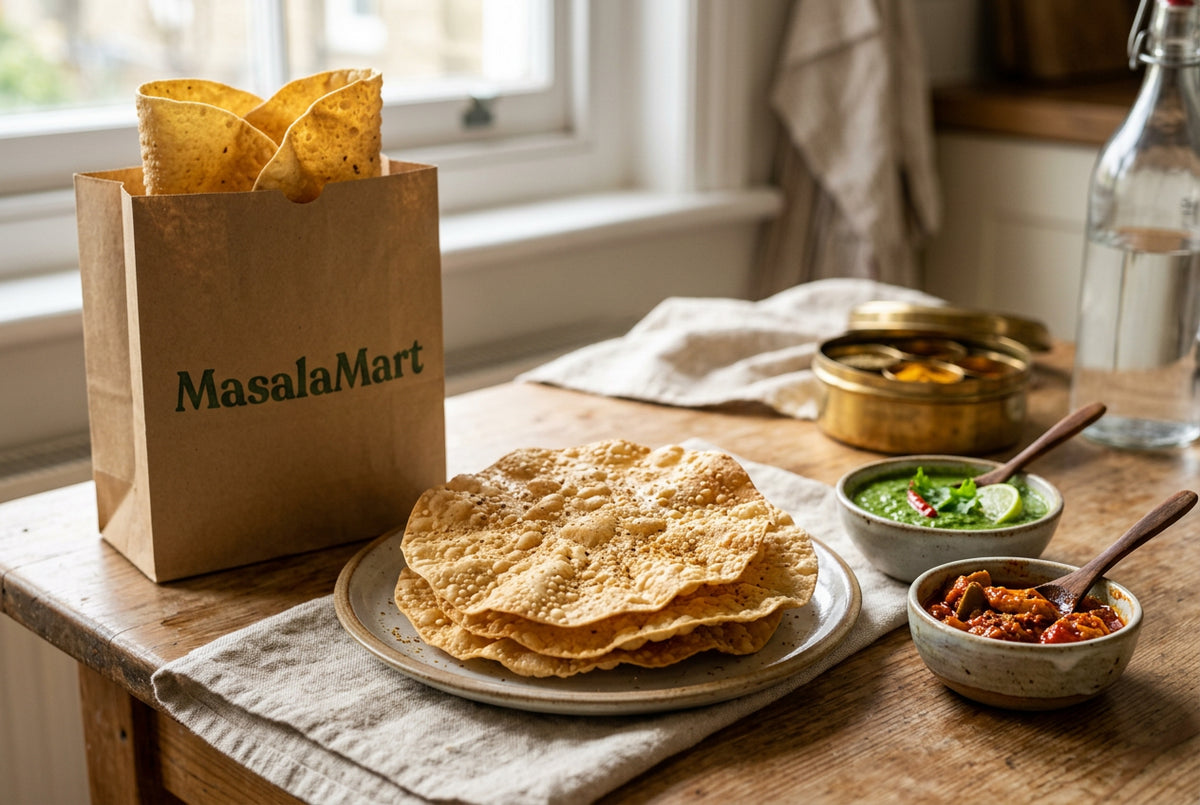
Looking to buy papad online in the UK? Check the ingredients, seasoning and preparation instructions before choosing your pack. Whether you want a crisp accompaniment to dal and rice or something to serve with chutney, different varieties offer different flavours and textures.
What is papad?
Papad is a thin wafer that becomes crisp when prepared. You may also see it called papadum or poppadom. Products can be made from ingredients such as urad, mung, rice or other flours, so the name alone does not identify the recipe.
Which variety should you choose?
Start with a flavour your household enjoys. Plain, cumin-seasoned and black-pepper varieties are among the options you may encounter, but ranges vary between shops. Read the ingredients and seasoning details rather than assuming every papad has the same heat level.
If a particular recipe calls for urad or rice papad, choose that type instead of treating every variety as interchangeable.
Uncooked or ready to eat?
Many papad packets contain dried wafers that need preparation. Others contain ready-to-eat products. Check the listing and label carefully before serving. A product photograph of crisp papad does not necessarily mean the contents are already cooked.
What to check before ordering
- Base ingredients: Check the pulse or flour used.
- Seasoning: Choose plain or flavoured varieties according to preference.
- Preparation: Confirm whether the product needs cooking and which methods are recommended.
- Pack size: Compare weight or piece count where provided.
- Ingredients and allergens: Read the product information for dietary requirements.
- Delivery: Confirm current availability and options for your UK address.
How to prepare papad
Follow the packet instructions. Depending on the product, recommended methods may include frying, roasting or microwave preparation. Do not assume one method or cooking time works for every brand or variety.
Prepare a small quantity first to see how the product behaves. Take care with hot oil and heated equipment, and use the method suited to your kitchen.
Ideas for serving
Serve prepared papad alongside dal, rice or a curry meal for a crisp contrast. Chutney or pickle can be offered separately. For a masala papad-style snack, some recipes add chopped onion, tomato, coriander and seasoning just before serving.
Wet toppings soften the wafer, so assemble topped versions close to serving rather than leaving them standing.
Choose a sensible pack size
A smaller pack is a useful starting point when trying a new variety. If you serve papad regularly, compare larger packs while considering storage space and the product's date information.
Follow the label's storage instructions before and after opening. Keep the original product details if transferring the contents into another container, and handle dried wafers gently to reduce breakage.
Browse groceries at MasalaMart
Visit MasalaMart to check the current grocery range. Confirm that the available papad listing matches your preferred ingredients and preparation method, then review delivery options for your address before ordering.
Common questions
Are papad and poppadoms the same?
The names are commonly used for the same broad type of crisp wafer, but individual products differ in ingredients, seasoning and preparation.
Can every papad be microwaved?
Do not assume so. Use microwave preparation only when it is supported by the product's instructions.
Is papad always ready to eat?
No. Many products are sold dried and uncooked. Check the label before serving.