
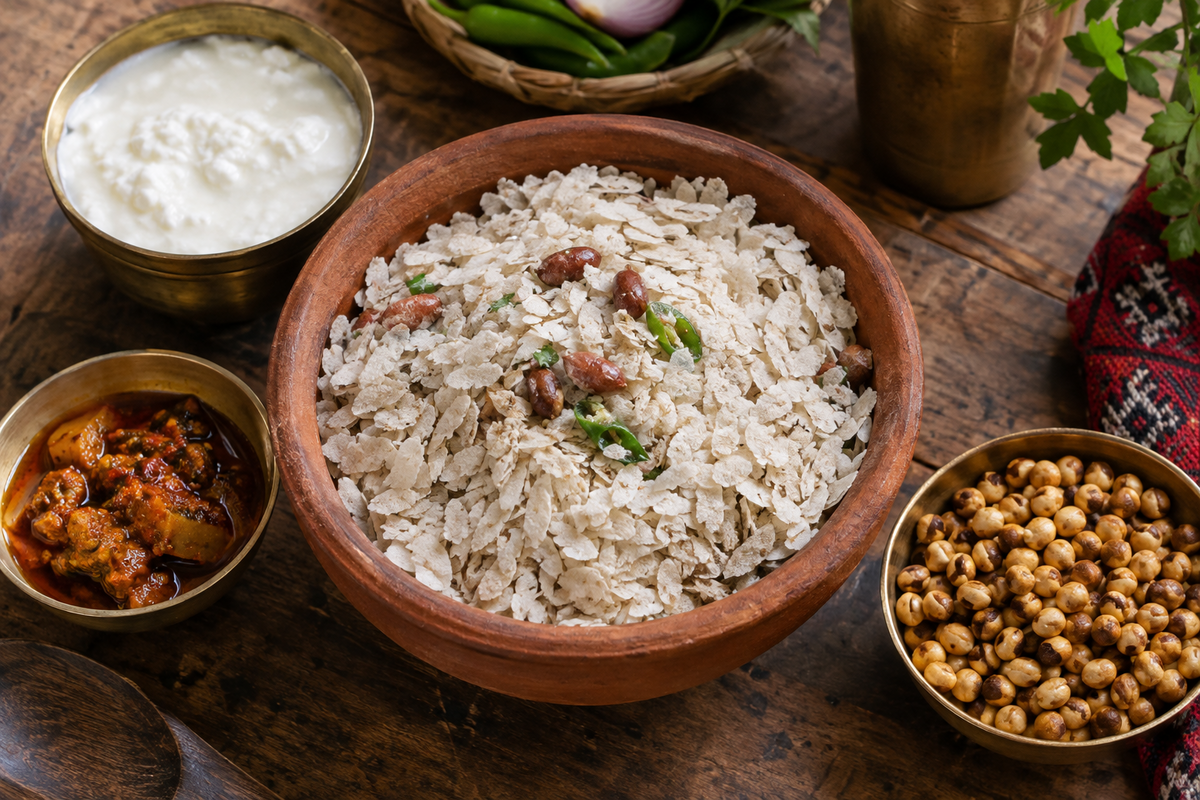
Chiura (चिउरा) is beaten or flattened rice used in Nepali meals and snacks. It is made into dry flakes and often served with yoghurt, achar, vegetables or meat dishes. Texture and preparation vary by product, so follow the actual pack rather than assuming every flattened rice is ready to eat in the same way.
For many Nepali families, chiura is connected with everyday meals, gatherings and familiar tastes from home. This guide introduces its uses; our separate chiura buying guide covers comparing packs and planning a UK order.
What makes chiura different from steamed rice?
Chiura is processed into flattened flakes rather than served as freshly steamed whole grains. Many traditional serving styles value its dry crunch or the way it softens with accompaniments. The exact texture depends on the product and how it is prepared.
In Newar food culture, beaten rice is also known as baji and is an important part of meals such as samay baji. Uses vary between families and occasions; there is no single compulsory plate for every household.
How is beaten rice made?
Production involves treating rice, flattening it and drying it into flakes. Traditional and modern processes vary. This outline is not a home-production method or a guarantee that every product has the same processing or readiness to eat.
Moisture can change the flakes' texture. Follow storage instructions and keep the packet appropriately closed rather than using crunch alone as a test of quality or safety.
How is chiura used in Nepali meals?
Dahi chiura
Dahi chiura combines beaten rice with yoghurt and can be served as a breakfast, snack or part of a meal. Choose a suitable chiura product and follow its preparation directions and a method you trust. This guide does not set one soaking time or yoghurt ratio for all flakes.
Yoghurt introduces milk and needs suitable handling and storage. Plain chiura's ingredients do not establish the dietary suitability of the finished dish.
Chiura with achar
Achar can add moisture, acidity and spice beside chiura. Tomato, sesame-based and other preparations give different results, so choose according to your preferences and the people eating the meal.
Browse the Pickles & Chutneys collection for relevant listings. Check each label: sesame, mustard, milk or other ingredients may matter for individual dietary requirements. A collection link does not confirm a particular pickle is in stock.
With vegetables, beans or meat dishes
Chiura can accompany vegetable preparations, beans or meat dishes. Sauces and other additions soften the flakes differently, so plan for the texture you enjoy rather than treating one combination as a rule.
Follow the separate safe preparation method for every accompaniment. A dried or cured meat product is not automatically ready to eat, and serving it with chiura does not replace its cooking directions.
Newari samay baji
Beaten rice is an important component of samay baji, a traditional Newari platter with varied accompaniments. These may include meat, beans, pickles and other preparations according to the version and occasion.
Choose a specific trusted menu or recipe if recreating a platter. This introduction does not prescribe one universal selection or imply that every accompaniment is available at MasalaMart.
Snacks and gatherings
Suitable chiura can be combined with ingredients such as onion, chilli or peanuts in snack preparations. Plain flakes, fried beaten rice and seasoned mixtures are different products; follow the directions for the form you have.
Peanuts and other additions need their own allergen checks. Plan quantities around your guests and the rest of the menu rather than assuming a retail packet represents one serving or one gathering.
Chiura and poha: related names, not guaranteed substitutes
Poha, beaten rice and flattened rice describe related products. Thickness, texture and processing can differ, so a product used for a crunchy accompaniment may not behave like flakes specified for a cooked poha breakfast.
Check product details before substituting. Our poha guide explains the separate thickness-and-recipe shopping question.
White and red Taichin options

MasalaMart's White Taichin Chiura and Red Taichin Chiura listings both identify Everest Wholesale 700g packs. Check the actual labels, preparation details and current availability before choosing.
The names do not establish which is healthier, crunchier or best for every dish. Neither the pictured pack nor a blog description replaces checking the product received.
A short choosing checklist
- Decide how you want to serve the chiura.
- Confirm the variety and whether it is plain, fried or seasoned.
- Read preparation, ingredients and allergen information.
- Choose a practical pack size and any suitable accompaniments.
- Check current availability and delivery options for your address.
Why chiura matters beyond convenience
Chiura has a place in Nepali social and cultural food traditions, especially in Newar cuisine, and appears in both everyday eating and occasions. For people living abroad, it can help recreate familiar meals and share food traditions with others.
Those connections are personal and varied. A useful introduction leaves room for different household preferences rather than defining one way of eating as the only authentic one.
Storage and preparation
Follow the packet's directions for storage and preparation. Retain ingredient, date and allergen details if transferring flakes into a suitable container. Do not apply one rinsing or soaking time to every chiura.
Once mixed with yoghurt, vegetables, meat or other ingredients, use handling and storage guidance suited to the finished dish. This guide does not establish a universal after-opening or prepared-food shelf life.
Frequently asked questions
What does chiura mean?
It refers to beaten or flattened rice used in Nepali meals and snacks. Exact product characteristics vary.
Is baji another name for it?
Baji is a name used for beaten rice in Newar food culture, including in samay baji.
Does chiura always need no preparation?
Do not apply one rule to every product. Check its actual readiness-to-eat and preparation directions and use a suitable serving method.
What is dahi chiura?
It is beaten rice combined with yoghurt. Preparation and proportions vary; check the chiura product and handle yoghurt appropriately.
Can I use any poha instead?
Not automatically. Compare thickness, processing and instructions, then use a method suited to that product.
Is red chiura always better than white?
No general ranking is established by the names. Choose for your intended meal and use actual product information for any dietary comparison.
Related guides
- Chiura buying guide for comparing white and red packs.
- Poha buying guide for related flattened-rice products.
- Nepali grocery guide for a wider pantry plan.
Explore chiura for your next Nepali meal
Review white Taichin chiura and red Taichin chiura, or browse the Nepali Food collection. Match the product to your meal, check current details and availability, and review address-specific delivery options before ordering.
For clarification, email [email protected] or call 07549 309088.